
Kids /
It’s not how much sugar your child eats, it’s how many times a day
 Dr. Vanessa MachucaPediatric dentistry · Dentalist Kids3 min read
In short
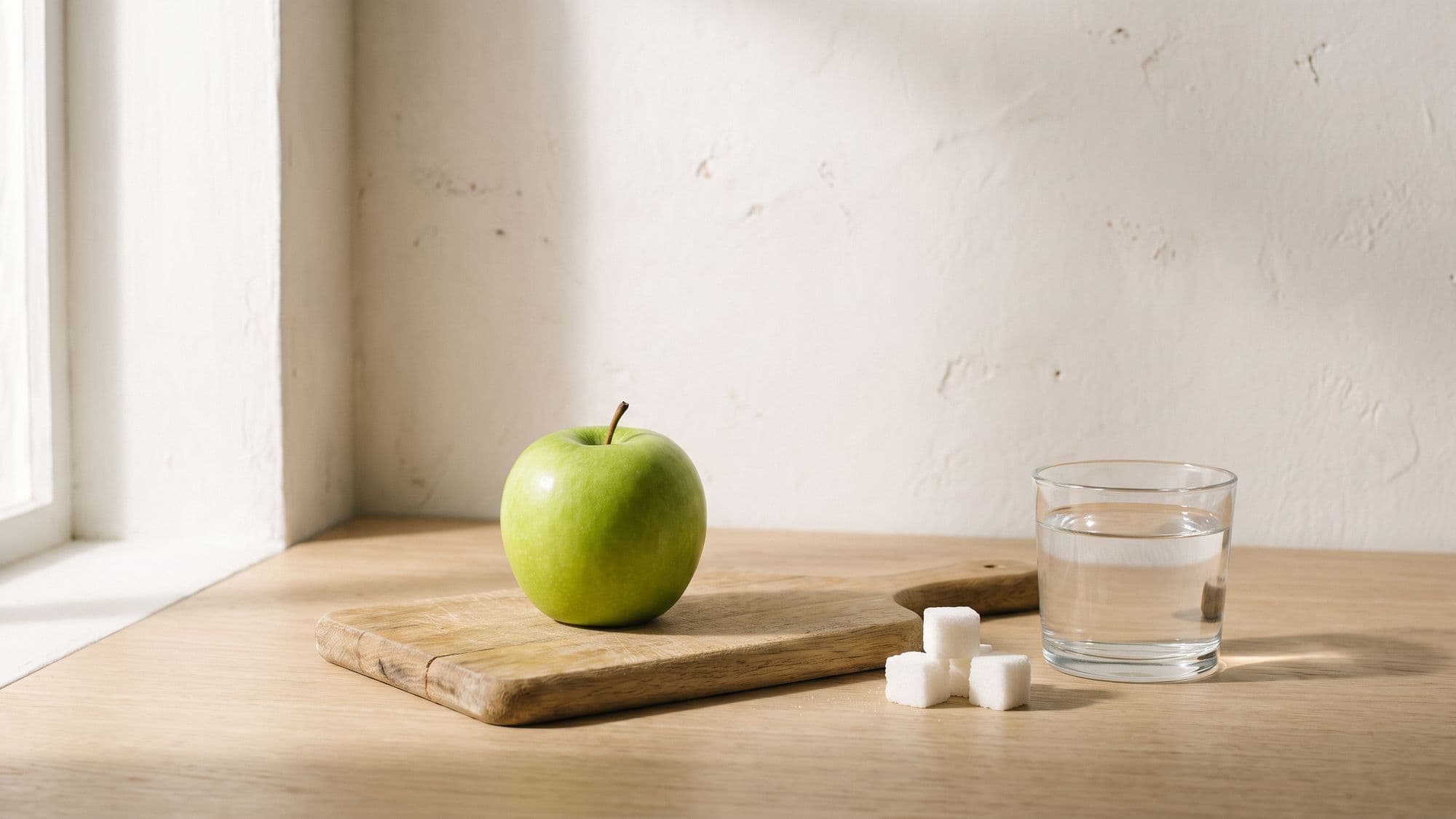
- For teeth, how many times a day your child has sugar matters more than how much.
- Every time sugar goes in, the mouth spends twenty minutes to half an hour under acid attack.
- Keep sweets to one time of day, ideally after a meal, and stick to water between meals.
There’s a conversation I have almost every week. A parent tells me they don’t understand why their child has cavities: hardly any candy, brushing three times a day, even the yogurt that says “no added sugar.” And almost always, when we go back over the child’s day, the same thing turns up.
It’s not how much sugar the child eats. It’s how many times.
What happens every time they eat
Every time sugar enters the mouth, the bacteria in plaque ferment it and produce acid. That acid starts dissolving enamel within minutes. Saliva takes twenty minutes to half an hour to neutralize it and bring the mouth back to normal.
That acidic stretch is what we call an acid attack, and here’s what almost nobody knows: the attack lasts about the same whether your child ate one gummy or twenty. What counts isn’t the size, it’s how many times the clock starts.
That’s why a whole bag of candy eaten in one sitting, after a meal, does less damage than the same bag spread out over the afternoon. In the first case there’s one attack. In the second there are ten, and the enamel never gets a chance to recover in between.
The ones that don’t look like sugar
When I ask parents what their child eats, almost nobody mentions these:
- Juice, even fresh-squeezed. Squeezing an orange releases its sugar and leaves the fiber behind. To a tooth, fresh juice and soda are more alike than we’d like.
- Flavored yogurt and flavored milk. Many have as much sugar as a dessert.
- “Fruit” gummies and cereal bars. On top of the sugar, they stick to the teeth and keep it in contact longer.
- Crackers, bread and chips. Starch turns into sugar in the mouth, and it gets stuck in the grooves of the back teeth.
- Drinks that get sipped over an hour: every sip restarts the clock.
What works without making everyone miserable
I’m not going to ask anyone to take sugar away from a child. It isn’t realistic, and it isn’t necessary either. What does work is changing the pattern.
Keep sweets to one time of day, ideally right after a meal, when there’s already plenty of saliva flowing. Water, not juice, between meals. And if there’s going to be something sweet, make it a short window, not a three-hour trickle.
That change doesn’t take anything away from your child in terms of amount, but for their teeth it makes a huge difference.
And about brushing
Three times a day is fine, but two details matter more than how often.
The first is the nighttime brushing. It’s the most important of all, because we make almost no saliva while we sleep, and the mouth is left without its natural defense. If you only manage one on a given day, make it that one.
The second is who does the brushing. A child doesn’t have the fine motor skills to do it well until around age seven or eight. They can brush first, so they learn, but then an adult has to go over it again. Especially the back teeth, which is where almost everything starts.
An honest caveat
None of this is a guarantee. Some kids with careful diets still get cavities, because enamel quality, how much saliva they make and even medications that reduce it also play a part.
But of all the factors involved, how often your child has sugar is one of the few that’s completely in your hands. And changing it doesn’t cost money, just a change of schedule.
Written by
Dr. Vanessa Machuca
Pediatric dentistry specialist. With years of experience in dentistry, she’s dedicated to sharing what she knows to improve her patients’ dental health.
View profile