
Orthodontics /
Braces or clear aligners: the question isn’t which is better, it’s which fits your case
 Dr. Vanessa MachucaPediatric dentistry · Dentalist Kids3 min read
In short
- Both straighten teeth; braces still handle complex cases better.
- Aligners only work if you wear them 20 to 22 hours a day.
- When you finish, retainers come next, and they’re for life.
It’s probably the question adult patients ask me most, and it almost always comes framed as a competition: which one is better. But both systems straighten teeth, and both work. The useful question is a different one: which one fits your case, your life and your discipline.
How each one works
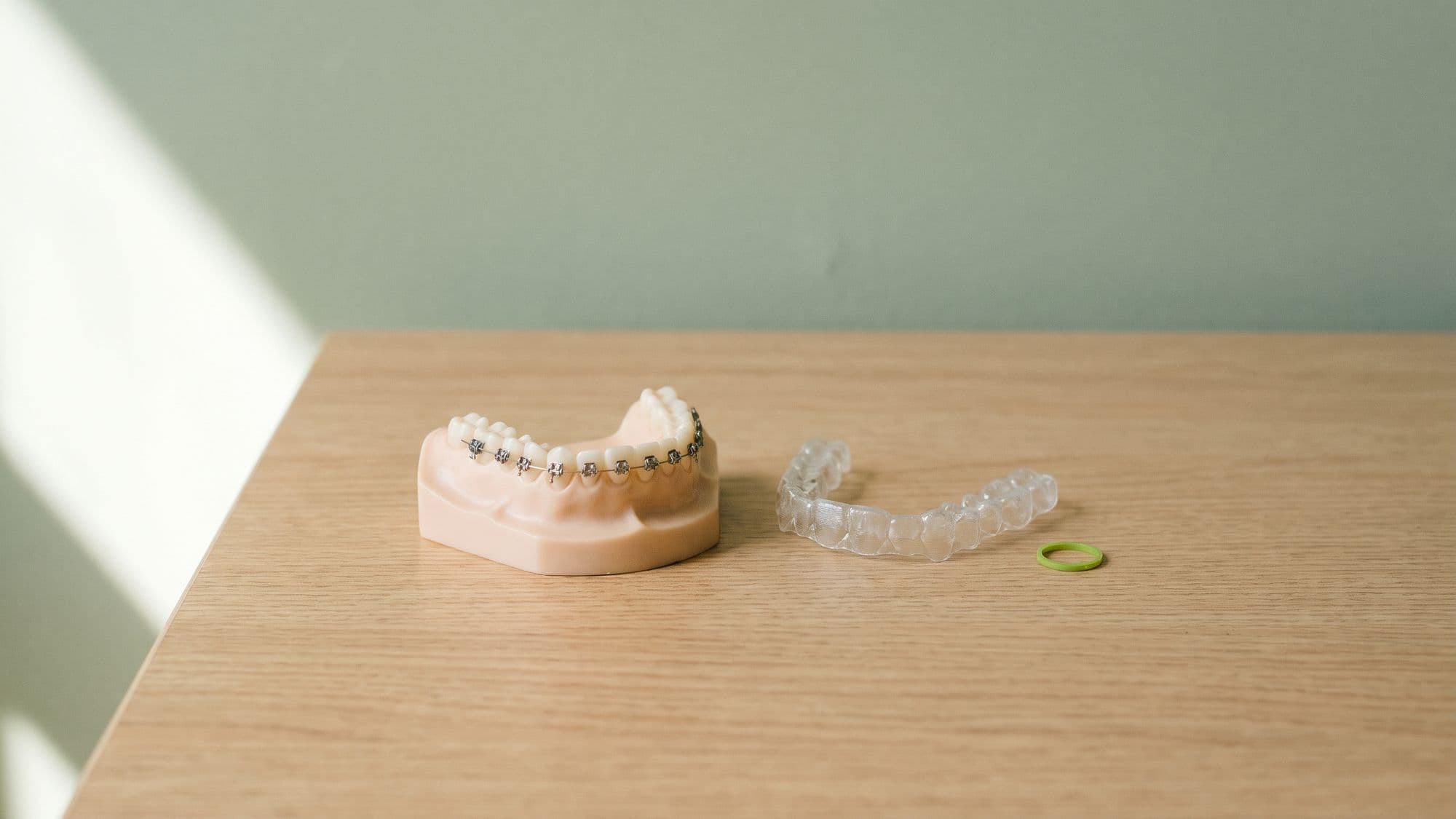
With braces, brackets are bonded to the teeth and connected by a wire. That wire applies constant force, and the orthodontist adjusts it at each visit by changing the wire or adjusting the elastics. That’s the key: the system is fixed, it works all the time and the patient can’t take it off.
Clear aligners are a series of clear trays, each one slightly different from the last. Each set moves the teeth a fraction of a millimeter and is changed every one or two weeks. You take them out to eat and to brush your teeth.
Where each one wins
Aligners have real advantages that matter a lot in daily life: they’re barely noticeable, you take them out to eat whatever you want, and keeping your teeth clean is much easier because you can brush with nothing in the way. With braces, keeping your mouth clean takes work, and that’s a risk factor for stains and cavities during treatment.
Braces, for their part, still handle complex cases better. When roots need to move significantly, a badly misaligned bite needs correcting, large spaces need closing or teeth stuck inside the bone need to be brought in, the control a fixed system gives you is superior. Aligner technology has come a long way and covers more every year, but there’s still ground where braces are the right tool.
The factor that matters more than the technique
And it’s the one that gets mentioned least in sales consultations: aligners have to be worn 20 to 22 hours a day.
That means taking them out only to eat and brush, and putting them right back in. It’s not a flexible recommendation: it’s the condition for the plan to work. If someone takes them out at work, in meetings or on weekends, treatment falls behind, stops matching the plan, and sets have to be remade.
With braces, that risk doesn’t exist, because they don’t depend on your willpower every day. That’s why, when someone honestly tells me they’re absent-minded or that they’ll forget, that answer weighs more in the decision than any technical comparison.
About price and timing
The cost difference between the two has been shrinking, and it depends mostly on how complex the case is, not on the system. A simple case with aligners can cost about the same as one with braces; a complex one usually costs more with aligners because it needs more sets and more monitoring.
When you compare estimates, this is what to check:
- What exactly is included: initial diagnostics, follow-up visits, and refinements if the result falls short.
- Whether the retainers at the end are included, and which ones.
- What happens if an appliance breaks or gets lost.
- How many visits it covers, and how often.
As for length, both systems take comparable time for comparable cases. What shortens or lengthens treatment is the complexity and how consistently the patient follows the plan, not the brand of the appliance.
The part almost nobody thinks about
However your treatment ends, retainers come next, and they’re for life.
Teeth have memory: the fibers around them tend to pull them back to where they were. Without retention, two years of treatment can be undone in just a few. This doesn’t depend on the system you choose, and it’s by far the most common reason people end up paying for orthodontics twice.
So when you compare options, include that question from the start. Orthodontic treatment doesn’t end the day the appliances come off.
Written by
Dr. Vanessa Machuca
Pediatric dentistry specialist. With years of experience in dentistry, she’s dedicated to sharing what she knows to improve her patients’ dental health.
View profile