
Prevention /
I brush three times a day. Why do I still get tartar?
 Dr. Vanessa MachucaPediatric dentistry · Dentalist Kids3 min read
In short
- Brushing removes plaque; tartar is hardened plaque, and only dental instruments can remove it.
- A cleaning doesn’t wear down enamel, and in a healthy mouth it doesn’t hurt.
- The guideline is every six months, but some people need to come in every three or four.
It’s one of the fairest complaints I hear: “I brush three times a day and I floss, so why do I have tartar?” It’s not poor hygiene. Your toothbrush and a professional cleaning solve two different problems, and one of them a toothbrush can’t solve, by design.
Plaque and tartar aren’t the same thing
Plaque is a sticky film of bacteria that forms on your teeth all the time, every day. It’s soft. Brushing and flossing remove it easily, which is why daily brushing works: it doesn’t stop plaque from forming, it removes it before it does damage.
Tartar is that same plaque, but mineralized. If plaque stays in one spot long enough, minerals in your saliva harden it into a crust stuck to the tooth. That process can start within days.
And here’s the point: tartar doesn’t come off with brushing. It’s not about scrubbing harder or buying a better toothbrush. It’s chemically bonded to the tooth surface and only comes off with dental instruments. That’s the whole explanation for why someone with excellent hygiene still needs cleanings.
Why something always gets left behind
No brushing is perfect, not yours and not mine. There are three areas where plaque almost always stays behind: the inner side of the lower front teeth, right across from where a salivary gland opens; the surfaces between teeth; and the edge where the tooth tucks under the gum.
In those spots, plaque stays long enough to harden. No matter how good your technique is, anatomy wins.
What happens during a cleaning
The procedure has three stages. First, your teeth and gums are checked, which is often the most valuable part, because that’s where problems that aren’t causing symptoms yet get caught.
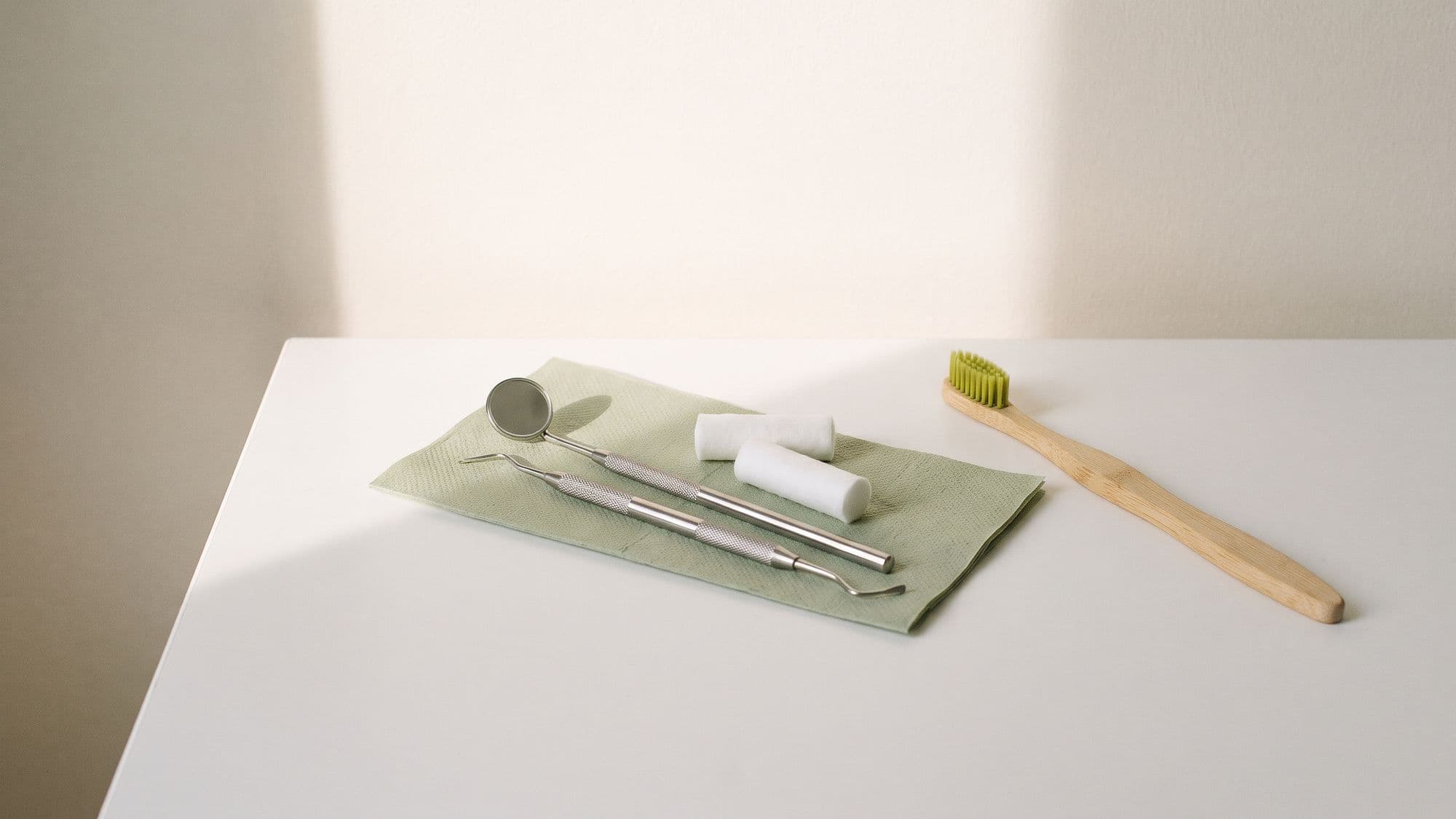
Next comes tartar removal, usually with an ultrasonic device that breaks it up with vibration and water, plus hand instruments for the fine areas. It’s the noisy part and the one people dread, and in a healthy mouth it doesn’t hurt.
Finally, the surfaces are polished. That’s not cosmetic: a smooth surface holds less plaque than a rough one, so polishing literally makes the next tartar take longer to form.
Two myths worth burying
- “Cleanings wear down your enamel.” The ultrasonic device works on the tartar, not the tooth. What people feel as sensitivity afterward isn’t wear: it’s that areas of the root that were covered by tartar are now exposed. That sensitivity usually fades within days.
- “My teeth were left with gaps after the cleaning.” They didn’t move apart: what was filling that space was removed. Seeing the real gap is information, not damage.
How often
The general guideline is every six months, but that’s all it is: a guideline. Some people build up tartar very quickly, because of the makeup of their saliva or their diet, and need a cleaning every three or four months. Others do perfectly well with once a year.
It’s a good idea to shorten the interval if you’re in orthodontic treatment, if you smoke, if your gums are sensitive or bleed when you brush, if you have diabetes, or if you’re pregnant, because hormonal changes increase the gums’ inflammatory response.
What’s really at stake
A cleaning isn’t about looks, even though your teeth end up shinier. Tartar built up under the gum keeps a chronic inflammation going that at first is called gingivitis and is reversible, and that, if it progresses, becomes periodontitis, where you lose the bone that holds your teeth in place. That part doesn’t come back.
The uncomfortable thing about that process is that it barely hurts until it’s already advanced. That’s why regular cleanings aren’t a maintenance luxury: they’re how you find out in time.
Written by
Dr. Vanessa Machuca
Pediatric dentistry specialist. With years of experience in dentistry, she’s dedicated to sharing what she knows to improve her patients’ dental health.
View profileRelated treatments