
Treatments /
Teeth grinding: why you do it and what actually works to treat it
 Dr. Vanessa MachucaPediatric dentistry · Dentalist Kids4 min read
In short
- Almost nobody catches it on their own: a tired jaw when you wake up and worn-down teeth are common signs.
- A night guard protects your teeth, but it doesn’t stop the grinding. Make sure it’s rigid and custom-made.
- What goes after the cause is managing stress, taking care of your sleep and ruling out sleep apnea.
Teeth grinding, or bruxism, has an awkward quirk: almost nobody catches it in themselves. Since it happens mostly while we sleep, most people find out from someone who hears it, or come in because of pain that seems to have nothing to do with their teeth.
The signs that give it away
It’s rarely just one. What raises suspicion is when several show up together:
- Waking up with a tired jaw or pain near the ear that gets better as the day goes on.
- Headaches when you wake up, typically at the temples, which is where one of the muscles that close the jaw sits.
- Teeth that get more and more sensitive to cold, with no cavities to explain it.
- Flat tooth edges, as if they’d been filed down, or teeth that look shorter than they did a few years ago.
- Small cracks or chips breaking off the enamel, or dental work that keeps breaking.
- A whitish line on the inside of your cheek, right where your teeth meet.
That last sign is one of the most reliable, and almost nobody knows about it: it’s the mark your teeth leave as they press against the inside of the cheek, night after night.
Why it happens
I have to be honest here: there’s no single cause, and anyone who tells you there is, is oversimplifying.
What we understand today is that sleep bruxism is linked to nervous system activity during certain stages of sleep, and that stress and anxiety clearly amplify it. Sleep quality also plays a role—especially breathing disorders like sleep apnea—along with some medications, alcohol, caffeine and tobacco.
For a long time, a misaligned bite took the blame. Today it’s considered to play a much smaller role than people thought. That’s why adjusting the teeth is rarely where treatment starts.
A night guard protects, it doesn’t cure
This distinction is the most important one in the whole article, and the one that causes the most misunderstandings.
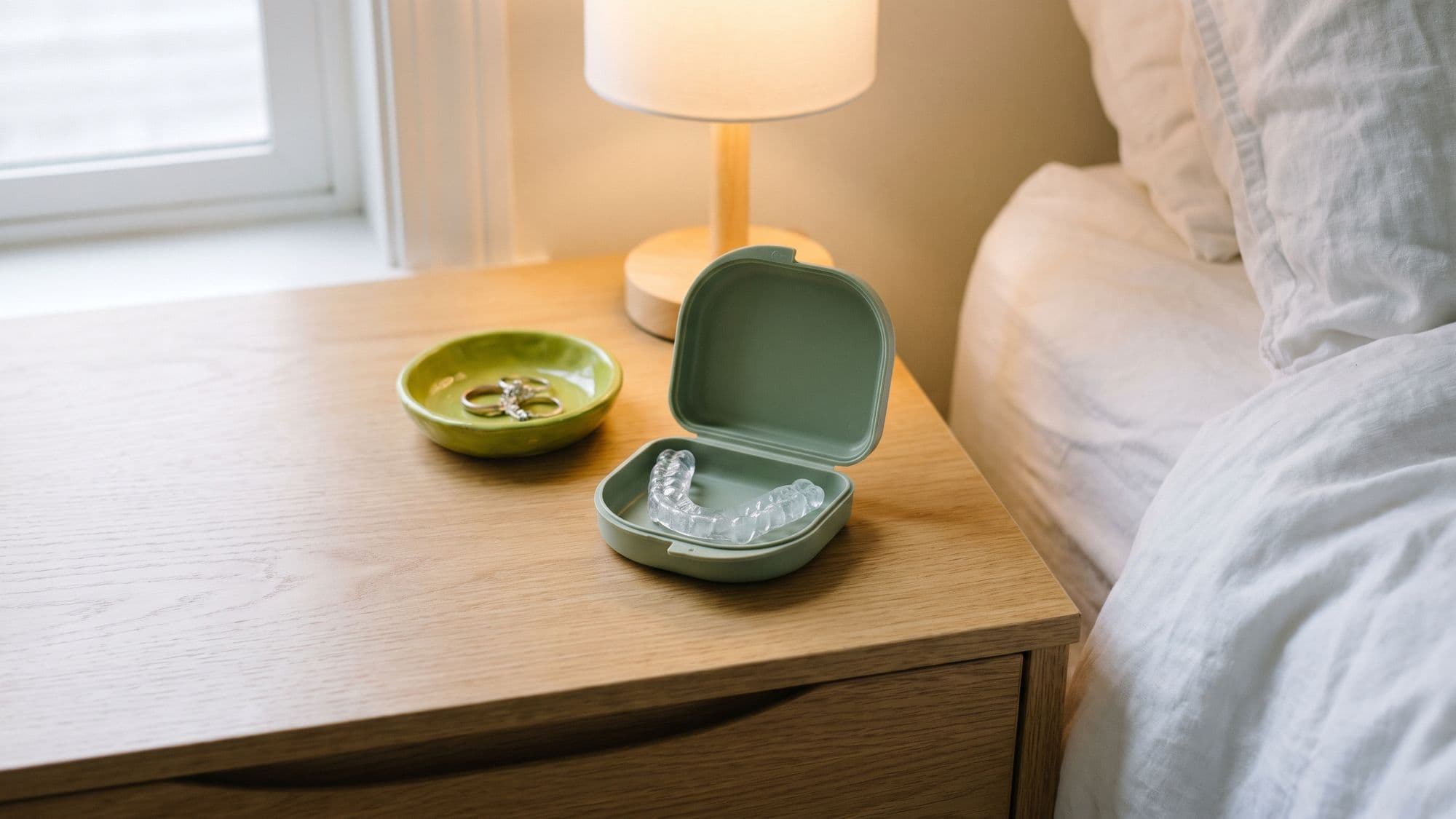
A night guard, or occlusal splint, is a rigid, custom-made appliance that fits between your upper and lower teeth. What it does is get in the way: the force you would have put on your teeth goes into the acrylic instead, and the acrylic wears down instead of your enamel. It also helps relax the muscles and spread the load more evenly.
What it does not do is stop the bruxism. You’ll keep clenching exactly the same. A night guard is a seatbelt: it doesn’t prevent the crash, it prevents the damage.
Understanding that changes your expectations. If someone has worn a guard for two years and still clenches, the guard didn’t fail: it’s doing exactly its job.
And about drugstore night guards
The kind you soften in hot water and bite into at home are made of soft material. That material invites chewing, and in some people it ends up increasing muscle activity instead of reducing it. Also, because they don’t fit well, they can move teeth over time.
If you’re going to wear one, make sure it’s rigid and made from a model of your mouth.
What actually goes after the cause
Since bruxism has many causes, the treatment has many parts too. What consistently helps is working on stress management, taking care of your sleep hygiene, cutting back on caffeine and alcohol, especially at night, and ruling out sleep apnea if there’s loud snoring, pauses in breathing or daytime sleepiness.
That last point is worth underlining: if the bruxism comes from a sleep-related breathing disorder, no guard will fix the underlying problem, and the underlying problem matters much more than your teeth.
Physical therapy for the jaw joint (TMJ) helps when muscle pain has already set in. And in specific cases, there are other options a specialist can assess.
When not to let it slide
Tooth wear doesn’t grow back. A tooth that has lost two millimeters of height won’t get them back, and rebuilding a mouth worn down over years is a long, expensive treatment.
That’s why the best payoff comes from stepping in early: protecting what’s still intact while you work on the cause. If you recognized yourself in three or four of the signs above, it’s worth having someone check the wear before it becomes the expensive part of the problem.
Written by
Dr. Vanessa Machuca
Pediatric dentistry specialist. With years of experience in dentistry, she’s dedicated to sharing what she knows to improve her patients’ dental health.
View profileRelated treatments